By the end of this piece, you'll be able to explain why a correct answer from an AI isn't the same as a mathematical breakthrough, and why that distinction is at the heart of the argument now rocking mathematics.
Per a report originally published by Phys, 2026 is shaping up as the year mathematics had an identity crisis. Frontier AI models from OpenAI and Anthropic have reportedly made stunning progress on major open problems. Some of the claimed breakthroughs, including alleged work on Navier-Stokes and the Riemann hypothesis, have provoked backlash from leading mathematicians, according to the article.
We can't verify those claims here, and the details matter. But the reaction itself tells you something. The fight isn't only about whether the AI is right. It's about what mathematics is for.
Why a right answer isn't the whole point
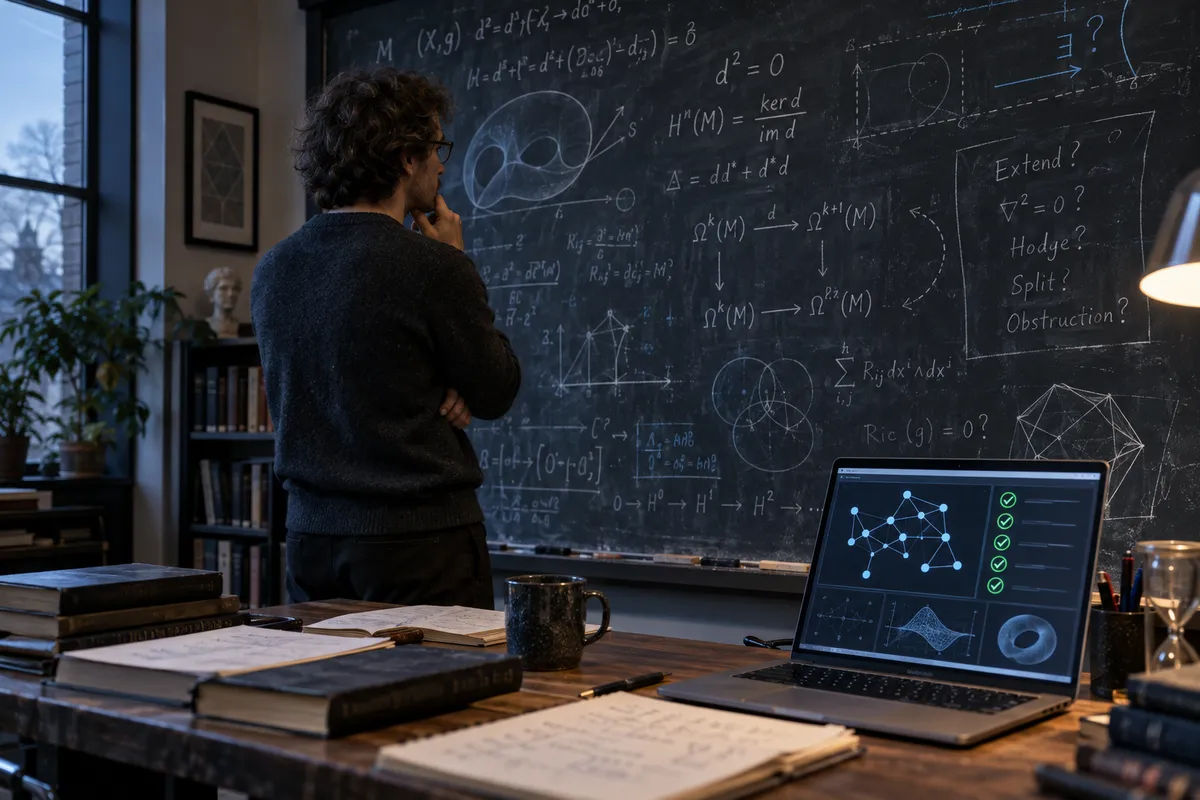
Most people picture mathematics as a machine for producing answers. The Phys piece describes a different view, one that many mathematicians hold: the field is about understanding. A proof is valuable partly because it shows why something is true, and the ideas built along the way can open doors to other problems.
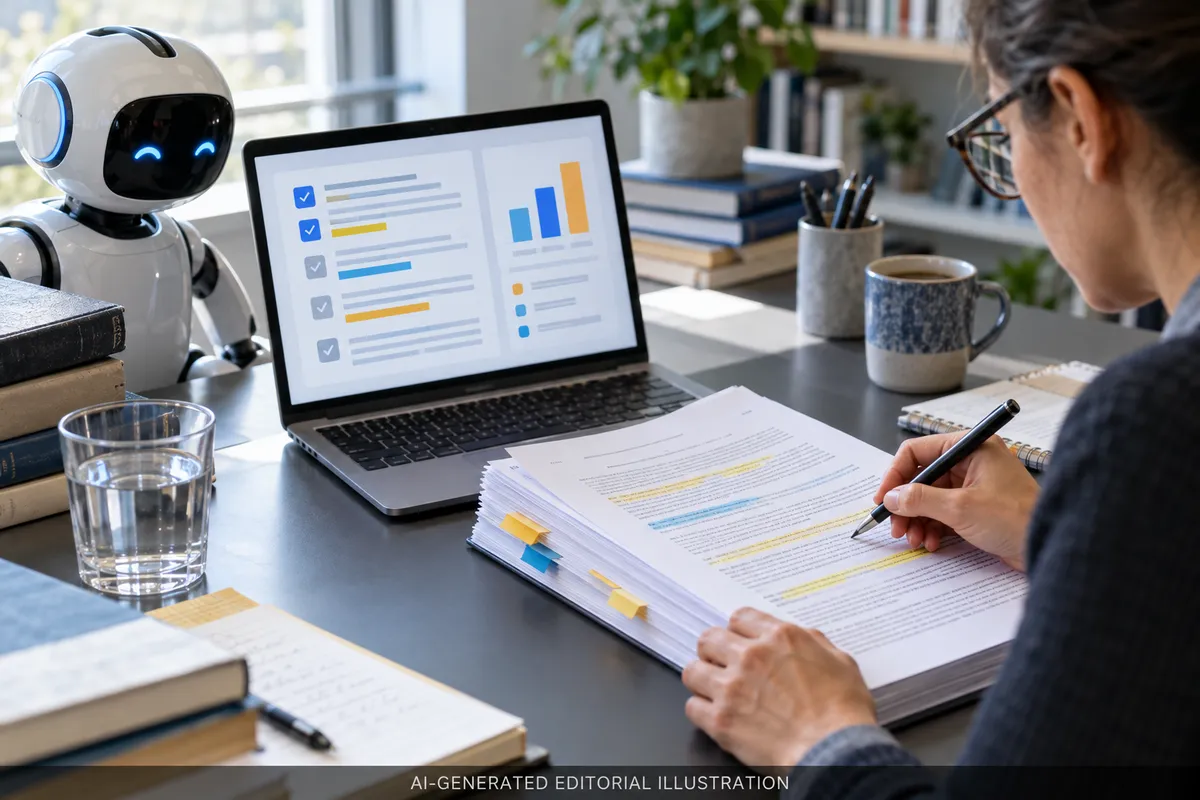
Think of it like homework. An AI that hands in a correct solution has solved the problem. Whether it has learned the lesson, and whether any human has, is a separate question.
That's the core worry. If results arrive faster than people can absorb them, the field could end up with a growing pile of true statements and a shrinking number of people who understand them.
Proof, verification and understanding are three different things
The article highlights formal verification as one of the forces reshaping the field. Here's a practical way to keep the terms straight:
- Proof: a logical argument that a statement is true.
- Verification: checking that the argument holds up. Formal verification does this with software, step by step, so a human doesn't have to trust the author.
- Understanding: a person grasping why the argument works and what it implies.
Verification can make AI-generated results trustworthy. It can't hand anyone understanding. A machine-checked proof might be airtight and still read like an alien document to the humans who need to build on it. When you see a headline about an AI "solving" a problem, ask which of the three it actually delivered.
From theory-building to industrial output
The piece argues that AI agents, formal verification and massive compute could shift mathematics from human-led theory-building toward industrial-scale production of results. Traditionally, a mathematician spends years developing a theory, and results follow. In an industrial model, you point enormous computing power at a long list of open problems and collect whatever comes out.
That would change the work itself. It would also change what gets rewarded. Problems that are easy to state and easy to check suit machines well. Slow, conceptual work that reshapes how people think is harder to measure and might get less attention.
This is the author's argument, and it's a forecast rather than a settled fact. But it's a useful lens: when you evaluate any AI claim in science, ask whether it produces results or insight.
What happens to the next generation
The article also raises the question of Ph.D. students. Doctoral training in mathematics has long worked like an apprenticeship: you tackle a hard problem, struggle, and in the process become a mathematician. If AI handles the breakthroughs, it's unclear what that apprenticeship looks like, or what a first-year student should work on.
That concern reaches well beyond math. Educators and anyone in knowledge work face a version of it: if a tool does the hard part, how do people build the skill needed to judge the tool's output? Mathematics, with its unusually clear standards of right and wrong, may be an early test case.
How to read the next AI-solves-math headline
Claims in this area will keep coming, and some will be disputed, as the Navier-Stokes and Riemann hypothesis claims reportedly were. A few habits help:
- Check who is saying it. Is it a company announcement, a preprint, or a result confirmed by independent mathematicians?
- Look for verification. Has the proof been formally checked, or only claimed?
- Ask what humans learned. Does the result come with new ideas people can use, or just a verdict?
- Notice the reaction. Backlash from leading mathematicians doesn't prove a claim wrong, but it signals that the standards of the field are being tested.
The future of human-only mathematics
It's hard to say whether a "human-only" corner of mathematics will survive, and the Phys article doesn't pretend to settle it. What it does make clear is that the field's culture, incentives and training are all up for renegotiation, not just its toolkit.
The takeaway you can use today: when AI hands you an answer, in math or anywhere else, don't stop at whether it's correct. Ask whether you, or anyone, understands why.