Wildfire smoke feels like an environmental problem until you start counting what it costs. A new modeling study from Simon Fraser University does the counting, and the headline number is large: more than $2.1 trillion in Canadian wildfire costs this century if warming reaches 3 to 4°C, according to Phys, which reported on the research.
By the end of this article, you'll know what that figure compares against, what the study says changes if warming is held to 2°C or less, and how to read a big climate number without being overwhelmed or dismissive.
What the study actually found
Per Phys's report, the Simon Fraser University team modeled wildfire impacts in Canada under different levels of climate warming. In a scenario where warming reaches 3 to 4°C, the estimated cost of climate-driven wildfires tops $2.1 trillion over the 21st century.
The study also argues that keeping warming to 2°C or less could hold wildfire impacts closer to recent historical levels. The researchers' own description, as quoted in the source's summary, is that failing to curb global warming now could cost future generations of Canadians trillions of dollars in wildfire impacts alone. The study is described as among the first of its kind.
That last point matters. Putting a dollar figure on wildfire risk is a newer way of framing a problem usually discussed in hectares burned or temperatures reached.
The comparison that matters: 2°C versus 3–4°C
The most useful takeaway is the contrast between two futures, not the single big number.
- Warming of 2°C or less: wildfire impacts stay closer to recent historical levels, per the study.
- Warming of 3–4°C: costs climb past $2.1 trillion over the century.
The gap between those outcomes is the real message. The number isn't a prediction that this will happen. It's an estimate of what one path costs compared with another. Think of it like a car's repair estimate: it tells you what happens if you ignore the problem, not that you must ignore it.
Why 2023 is the preview
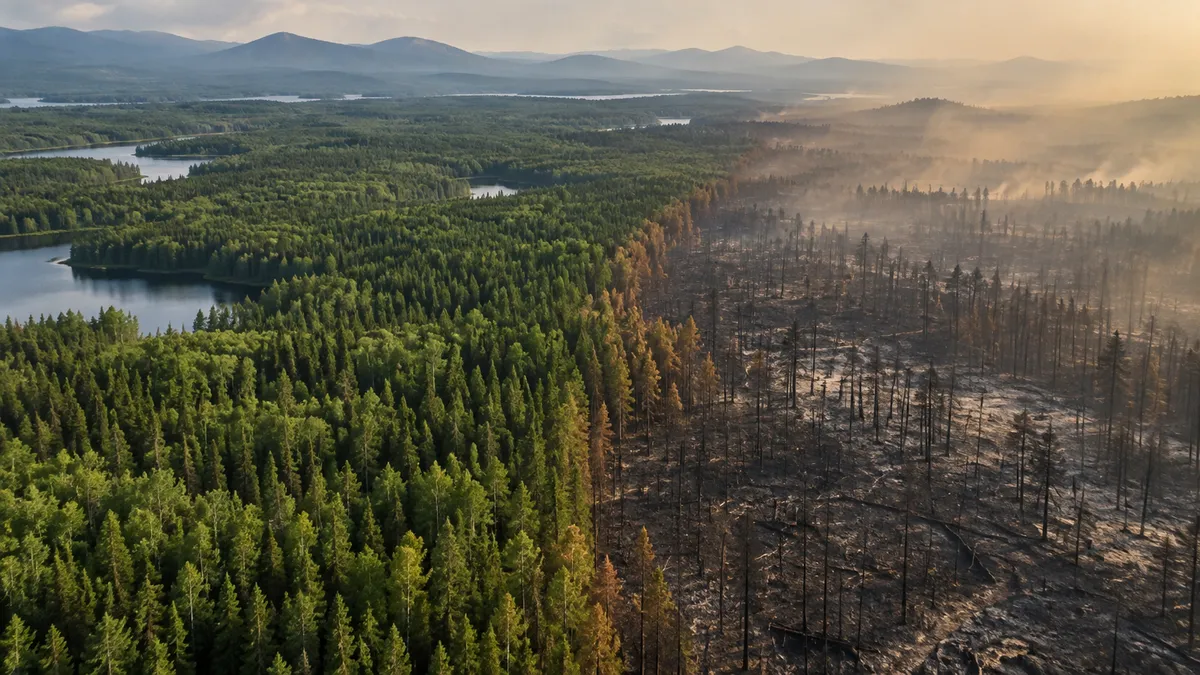
Canada's record 2023 wildfire season made smoke, evacuations, and climate costs hard to ignore. If you lived through those smoky skies, you already have a rough sense of what "more wildfire" means in daily life: cancelled outdoor plans, air quality warnings, and communities forced to leave their homes.
The study scales that experience across a century. Our reading, not a claim from the researchers: 2023 is a useful mental anchor for what a cost line in a model looks like on the ground.
What a wildfire bill can include
The summary of the research doesn't itemize every category in the $2.1 trillion, so we won't guess at the breakdown. But wildfire costs generally land in several places you can picture:
- Household: evacuations, disrupted work, and property at risk.
- Public health: smoke exposure reaches far beyond the fire zone.
- Insurance: higher risk tends to show up in premiums and coverage.
- Forestry: burned timber and damaged forests.
- Recreation: closed parks and trails, and lost tourism.
These are general categories, not a confirmed list of what the study counted. If you want the exact accounting, check the full study through Simon Fraser University.
Why the estimate could be conservative
Big modeling numbers can feel either terrifying or abstract. Two habits help.
First, treat the figure as a scenario, not a forecast. It depends on how much the planet warms, which depends on choices not yet made.
Second, remember that models only count what they can measure. Costs that are hard to price, like long-term health effects or the loss of a favorite landscape, tend to be harder to include. The study's framing as an early effort suggests the field is still developing, so treat the total as a starting point rather than a ceiling. That's our interpretation; the report reporting doesn't give the researchers' own caveats in detail.
Climate action as damage control
The findings arrive as governments face pressure to justify climate policy through economic risk, not just environmental urgency. A dollar figure gives policymakers and voters a common language: if one path avoids trillions in damage, emissions cuts look less like a sacrifice and more like a way to limit losses.
The study doesn't say what prevention itself would cost, so a full cost-benefit comparison isn't possible from this research alone. What it does show is the size of the downside.
What you can do with this
You can't personally lower a trillion-dollar figure, but you can use it sensibly:
- Check your local fire and smoke readiness. Know your evacuation routes and where to find air quality updates.
- Ask about wildfire risk in insurance and home decisions. Costs show up in practical places.
- Weigh climate claims by scenario. When you see a large number, find the warming level behind it.
- Follow local policy. Municipal and provincial choices on forests, land use, and emissions are where these numbers become decisions.
The single most useful thing to remember is the gap between the two futures: ask which warming scenario any wildfire number assumes, because that's where the choice lives.