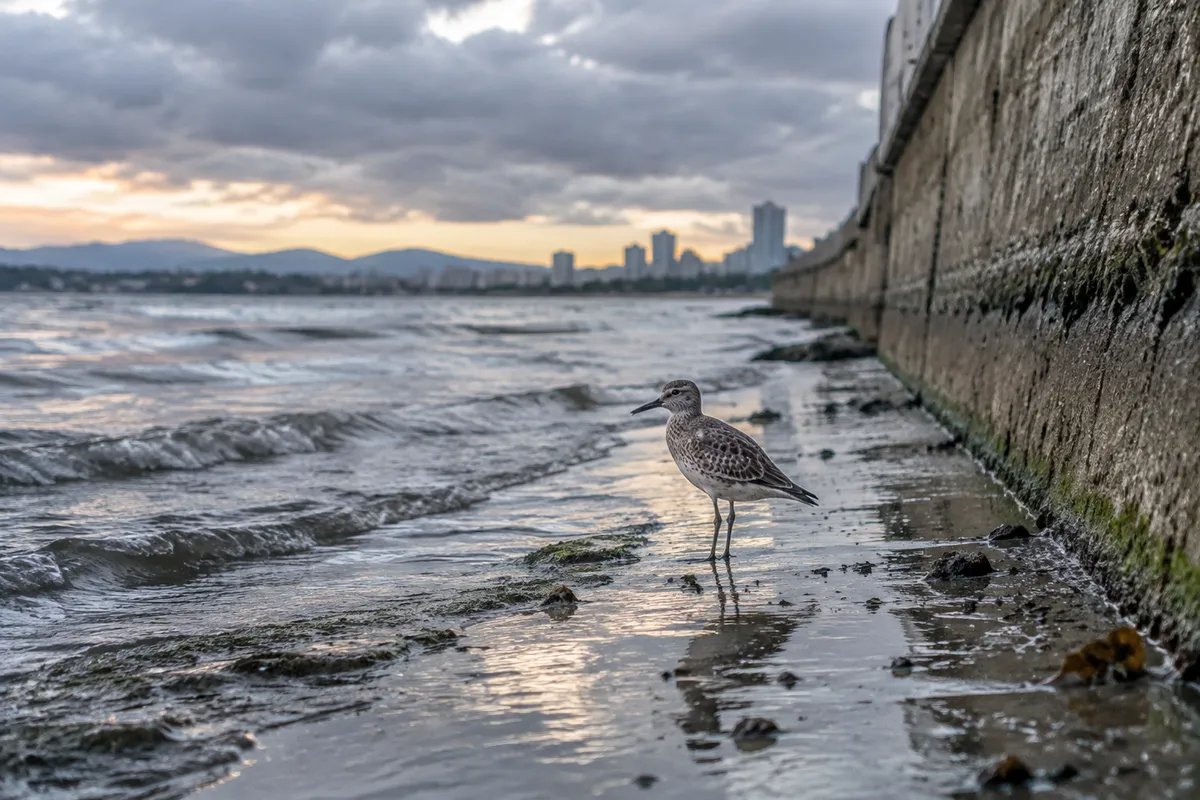
Next time you stand on a beach or look out over a tidal flat, you can understand a major threat to migratory shorebirds with one picture: water rising on one side, buildings and seawalls on the other, and nowhere left for the birds to stand. That is the core of a problem laid out in a Phys report on how rising seas are putting the world's migratory shorebirds at risk. By the end of this piece, you will know what "coastal squeeze" is, why migration stops matter so much, and what kinds of shoreline choices help both birds and people.
What the research found
Per Phys, a review of 37 studies points to widespread risks from sea-level rise for shorebirds. The concerns span three areas: the condition of their habitats, their survival, and the migration "bottleneck" sites they rely on.
The habitats in question are familiar ones: beaches, salt marshes, and tidal flats. According to the report, climate-driven sea-level rise is shrinking and degrading these places. Many shorebird populations are already declining, so the added pressure arrives at a bad time.
Coastal squeeze, explained in one picture
Phys describes coastal squeeze as ecosystems getting trapped between rising water and coastal infrastructure. Here is a simple way to picture it.
- Imagine a tidal flat or marsh sitting between the sea and a road, town, or seawall.
- As the sea rises, the water side of that habitat floods.
- Left alone, a habitat can sometimes shift inland, away from the water.
- With development behind it, there's no room to move, so the habitat gets thinner and eventually disappears.
The habitat isn't destroyed by one dramatic event. It is slowly pinched from both sides. The shorebirds that feed and rest there lose ground with it.
Why migration bottlenecks raise the stakes
Migratory shorebirds travel long distances and depend on a chain of coastal sites along the way. The research highlights bottleneck sites, which are places where a large share of a population relies on a small area. When a bottleneck habitat shrinks or degrades, the effect isn't local. It can ripple through the whole migration.
That is why the review's attention to these sites matters. Protecting a handful of critical stopovers can do more for a species than protecting many places the birds only pass through briefly. (That framing is our reading of what a bottleneck implies, rather than a finding quoted from the report.)
Why protecting these habitats helps people too
Phys notes that the same coastal ecosystems that shelter shorebirds also defend human communities, store carbon, and support broader biodiversity. So the goal isn't birds versus people. Healthy marshes and flats are doing useful work for both.
That shifts how you might think about shoreline planning. A seawall protects a stretch of coast in one way, but it also fixes the line where land meets water. Nature-based approaches that leave room for marshes and flats to adapt can keep the habitat alive while still serving as coastal defense. The report points to protecting these habitats as increasingly urgent, and it is a reasonable next step to ask which approach a given coastline allows.
What you can do
You don't need to be an ornithologist to act on this. A few practical options:
- Pay attention to your local coast. Notice where beaches, marshes, and flats sit relative to roads and buildings. Those are the places where squeeze happens.
- Ask about shoreline plans. When your town discusses seawalls, development, or coastal setbacks, ask whether habitats have room to move inland.
- Support habitat protection. Backing conservation of marshes, flats, and stopover sites helps birds and also the communities and carbon storage tied to them.
- Give birds space. Keep your distance from resting and feeding flocks so they can use the habitat that remains.
The takeaway
Sea-level rise isn't only an ice-cap story. It is also a story about the muddy flat and quiet marsh near you, and whether they have room to survive. Next time you visit the coast, look for the space behind the shoreline, and speak up for keeping it open.