Every fall, a butterfly weighing less than a paperclip leaves the Midwest and flies to Mexico. Where exactly it goes along the way, and how weather shapes the trip, is still poorly understood. Iowa State researchers are working to change that, and by the end of this article you will know how they are doing it, what question they hope to answer, and what you can do to help monarchs yourself.
The study: 100 monarchs, one tiny tag each
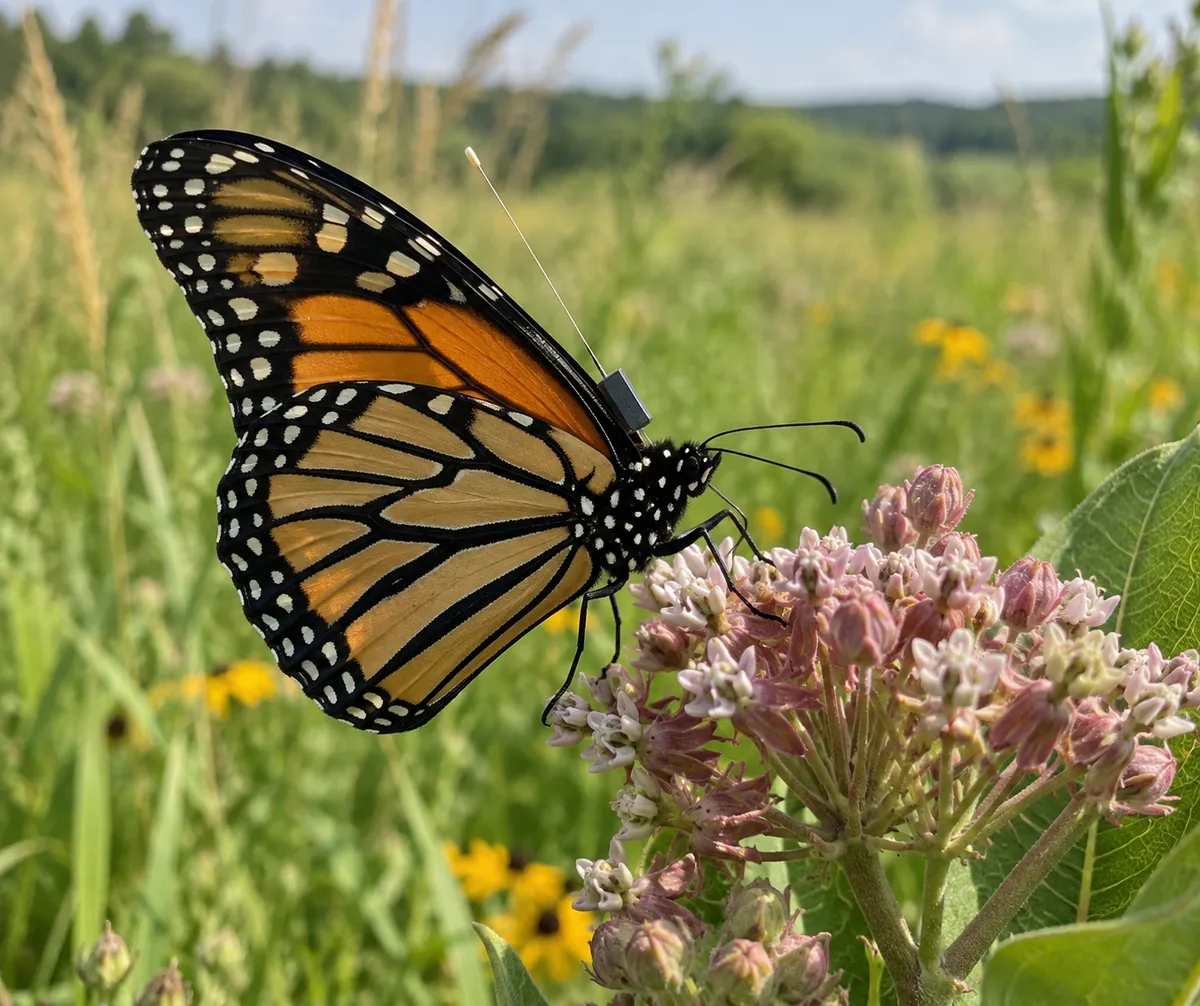
Per reporting from Phys, Iowa State researchers are using BlūMorpho tracking tags, described as the lightest available, to monitor 100 monarch butterflies on their fall migration to Mexico. The goal is to fill gaps in what scientists know about the pathways monarchs take and how weather affects the journey.
Before leaving, monarchs fuel up on nectar from Iowa's fall-blooming wildflowers. Then they begin a trip that, according to the report, takes about eight weeks.
Why the tag's weight matters
A tracker on an insect has to be small enough not to burden it. That is why the lightest tag available is the key piece of this project. Researchers are also looking at the technology as an improvement on older approaches such as wing decals, which depend on someone finding a tagged butterfly by chance. Tags that report in more directly can show routes and timing as the migration unfolds, rather than only where a butterfly happened to be recovered.
That shift matters because the eight-week trip is exactly where the knowledge gaps sit. Knowing where a monarch started and where it ended is useful. Knowing the path between, and what the weather did along the way, is what researchers say they are missing.
The question underneath: does how a monarch is raised matter?
The study does not only follow butterflies. It compares monarchs raised under different conditions with wild-caught ones, to see whether rearing practices affect survival and navigation.
This speaks to a familiar debate. Many people raise monarchs from caterpillars at home or in classrooms, often indoors, hoping to give them better odds. Whether that helps, harms, or makes no difference to a butterfly's ability to find its way to Mexico is a real open question. If tracking shows that reared monarchs navigate and survive as well as wild ones, that is useful news for hobbyists. If not, it could change how people are advised to help.
Until results arrive, treat any strong claim on either side as unproven. The study exists because the answer is not yet known.
Why Iowa is the right place to ask
The eastern North American monarch population has declined by as much as 80%, per the report. The Midwest, and Iowa in particular, matters a great deal because many of the butterflies that overwinter in Mexico originate there.
Iowa has also put real work into habitat. The report cites more than 690,000 acres of habitat established since 2015. Tracking data could help show whether that kind of restoration is placed where monarchs actually travel and feed, which is the sort of conservation question researchers have struggled to answer without real-time movement information.
What you can do
You do not need a research grant to help. Based on the participation options the researchers highlight:
Join the tracking effort
The Project Monarch app is how the public can take part in the research. If you see monarchs during fall migration, this is the route the project points to for getting involved.
Plant for the trip, not just the summer
Monarchs fuel up on fall-blooming wildflowers before leaving Iowa. A yard, porch container, or community plot with late-season nectar plants gives migrating butterflies something to eat when they need it. Milkweed on a porch is another way people contribute to monarch conservation.
Hold off on strong rearing advice
If you raise monarchs, keep doing it thoughtfully, but watch for the study's findings before drawing conclusions about indoor versus outdoor methods.
What to watch for next
The findings to look for are straightforward: the routes the 100 tagged monarchs take, how weather speeds up or slows down their eight-week flight, and whether reared and wild-caught butterflies fare differently. Each answer would sharpen where habitat work should go.
The practical step for this week is simple: find out which wildflowers bloom in your area in autumn, and plant or protect a few. A migrating monarch only needs one good meal stop at a time, and you can be one of them.