Next time you read that a region's plants are "responding to climate change," you can ask two sharp questions: where was this studied, and how do we know climate was the cause? A new global review, reported by Phys, shows why those questions matter. It found major blind spots in how we monitor some of the world's most climate-vulnerable ecosystems.
What the review found
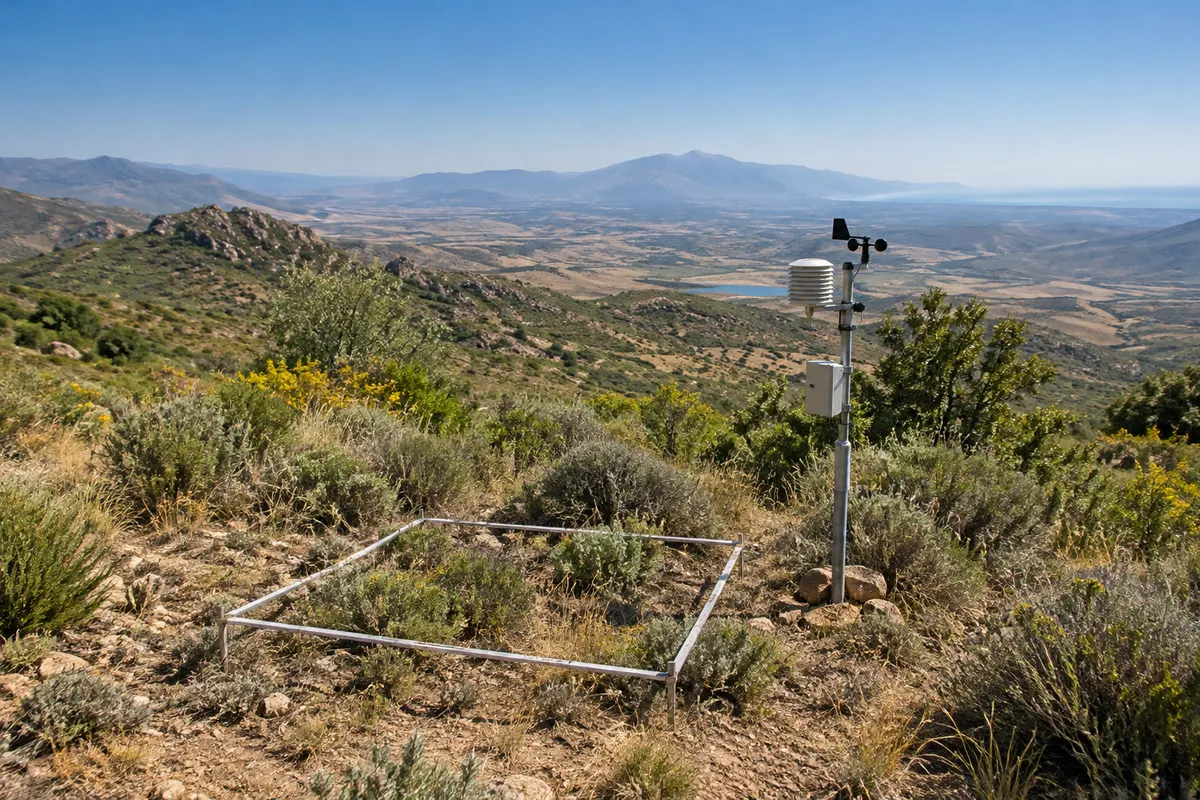
The review is a systematic look at 128 studies of observed climate change impacts on plant communities in Mediterranean-type ecosystems, or MTEs. These ecosystems are found in five regions: California, the Mediterranean Basin, Chile, Australia and South Africa. They are described as biodiversity hotspots, and many are facing extreme droughts and climate stress.
The evidence base, though, is lopsided. Per the report, only 9% of the research was conducted in the Global South. The studies also lean toward California and the Mediterranean Basin, which leaves Chile, South Africa and Australia thinly covered.
Why a skewed map matters
It's tempting to assume that what we learn in one Mediterranean-type region applies to the others. They share a climate pattern, after all. But the review's point is that we have far less direct observation from three of the five regions. That means predictions about how plants there will respond rest on thinner evidence.
That's a practical problem, not just an academic one. Conservation decisions, such as where to protect land or which species to watch, depend on knowing what is actually happening on the ground. If most of the observations come from two places, the other three are partly guesswork.
The detail that deserves your attention: 91% versus 9%
The 9% figure covers the Global South, and it implies roughly 91% of the studies came from elsewhere. From a reader's perspective, this tells you something about whose ecosystems get measured. Research funding, long-term monitoring stations and trained field teams are not spread evenly around the world. The ecosystems may be equally at risk, but the data about them is not equally available.
That is my reading of the numbers, not a claim made in the summary of the review. But it's a useful lens: a gap in data often follows a gap in resources.
Seeing change isn't the same as proving the cause
The review also touches on a subtler issue, causal inference. If vegetation changes at the same time as the climate does, that doesn't prove the climate caused the change. Other factors can shift plant communities too, and untangling them takes careful study design.
When you see a headline linking a plant decline to warming, check whether the research actually tested the link or simply noticed two trends moving together. Both kinds of study are useful, but they support different levels of confidence.
Models versus what's on the ground
Climate projections tell us what might happen. Field observations tell us what has happened. The review focuses on the second kind, observed impacts, and finds that coverage is patchy. Models are only as trustworthy as the real-world checks we can run them against, and those checks are missing in several regions.
How to read the next climate-and-nature story
You don't need a science degree to apply this. Run through a short checklist:
- Where was it studied? One region's result may not carry over to another.
- How many studies back it? A single study is a clue, not a verdict.
- Observed or modeled? Real measurements and projections answer different questions.
- Did the researchers test causation? Correlation alone leaves room for other explanations.
What would help fill the gaps
One of the angles raised in coverage of the review is reusing historical datasets. Older records, if they can be found and put to use, could help fill monitoring gaps faster than starting from scratch. The broader call is for more coordinated global monitoring, so the places with the least data get attention alongside the places that are already well studied.
The takeaway
When you hear a confident claim about how an ecosystem will fare under climate change, ask what evidence sits behind it and from where. For Mediterranean-type ecosystems, the honest answer today is that we know a lot about two regions and far less about three others.