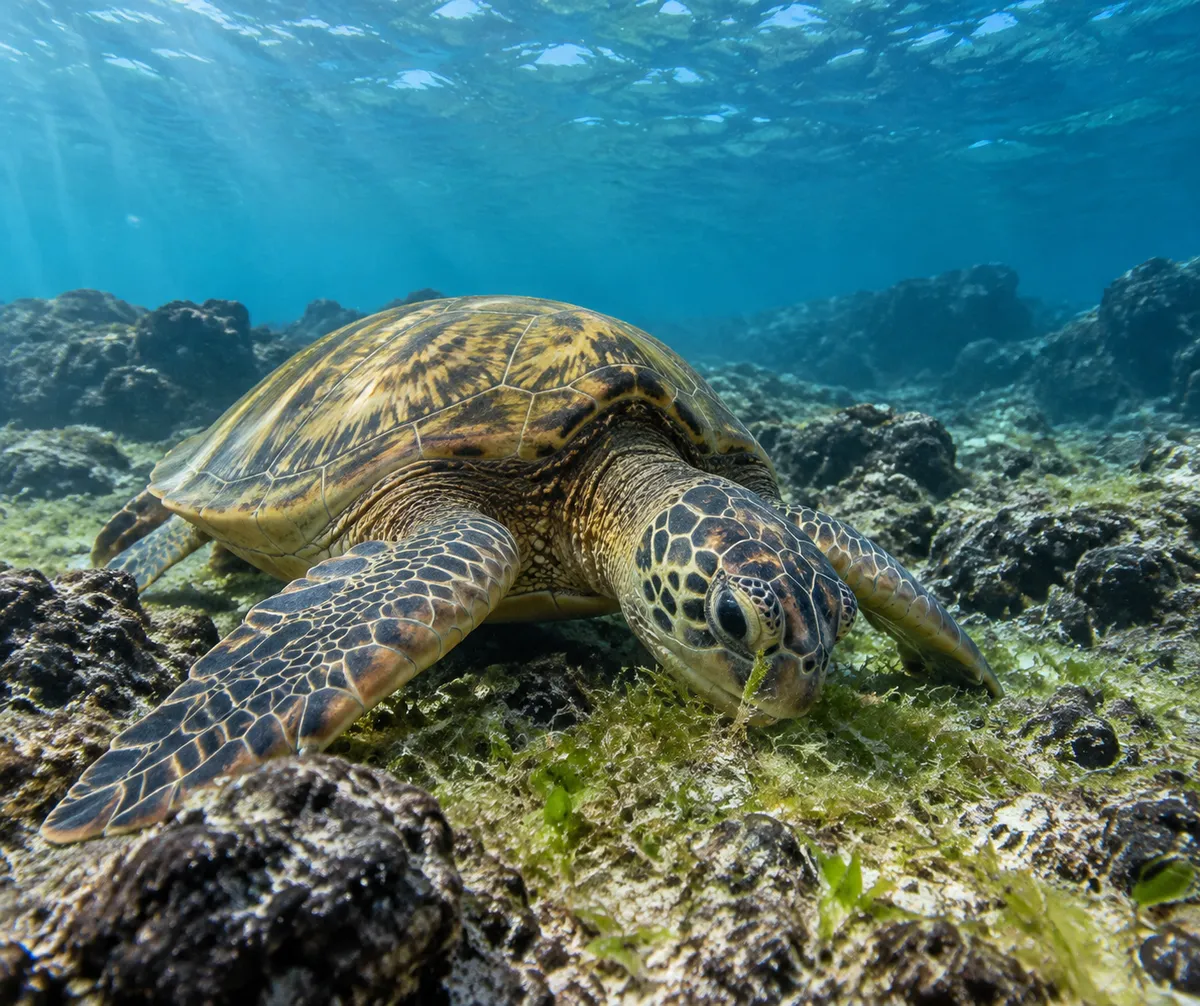
Sea turtles have a reputation as the ocean's great travelers. Scientists tracking yellow-morph green sea turtles in the Galápagos found something that cuts against that image: these turtles stayed put. By the end of this article, you'll know what the researchers found, how tracking reveals this kind of hidden behavior, and why a stay-at-home turtle changes how we think about protecting wildlife.
The turtles that didn't leave
Per reporting from Phys, scientists followed yellow-morph green sea turtles in the Galápagos and expected long-distance migration. Instead, the animals stayed within the marine reserve.
That's a surprise because sea turtles are known as prodigious wanderers. As the Phys description puts it, they are guided by Earth's magnetic field, ocean currents and the sun, and they tend to crisscross the seas in search of food, returning to the region of their birth to breed.
The study suggests these particular turtles use shallow coastal habitats and inter-island routes in a more local way than researchers had assumed. In other words, the Galápagos aren't a stopover for them. They look more like home.
Why a homebody turtle is a big deal
If an animal travels thousands of miles, its fate depends on many places at once. If it stays within one reserve, its fate depends heavily on that reserve. That's the key shift here.
The finding highlights how even famously migratory species may rely on specific local habitats. Marine reserves face pressure from fishing, tourism, climate shifts and coastal degradation, so a population that lives its whole life in one area has less room to simply move away from trouble.
This also complicates a common assumption in sea turtle conservation: that one species behaves one way everywhere. Populations with distinct morphs and movement patterns may need different thinking.
Yellow versus black: why the color matters
Green sea turtles in the Galápagos come in more than one look, and the "yellow" in this story refers to a distinct morph. The takeaway from the reporting is that appearance and behavior may go together: a group that looks different may also move differently.
That matters because treating all green turtles as one uniform group could hide populations whose needs are specific. A plan built around epic migrations could miss a group whose life plays out along nearby shorelines.
How scientists find out where turtles go
You can't watch a turtle for months, so researchers track them. The approach is simple in concept: attach a device to an animal, then follow where it goes over time. The pattern of locations becomes a map of the animal's private life.
The value of tracking is that it tests reputation against reality. Everyone "knew" sea turtles roam. Following individual animals showed that this group didn't, at least within the study.
A few lessons from that approach apply well beyond turtles:
- Assumptions about a species may not fit every population. Behavior can differ within the same species.
- Absence of movement is data. A turtle that stays is as informative as one that leaves.
- Local detail beats broad reputation when you're deciding where to focus protection.
What this means for protecting the Galápagos
The study points toward the importance of shallow coastal habitats and the routes between islands. If turtles depend on those areas day to day, then damage there hits them directly.
This is my analysis rather than a claim from the study, but the logic is straightforward: reserves protect best when they safeguard the specific places animals actually use. For a homebody population, coastal degradation, heavy boat traffic or fishing pressure in those shallows may matter more than anything happening far out at sea.
Caveats worth keeping in mind
This is one set of tracked turtles in one place. It doesn't mean sea turtles in general have stopped migrating, and it doesn't erase the well-documented long journeys of other populations. What it shows is that variety exists, and that it's easy to miss when everyone is looking for the famous behavior.
The takeaway
When you hear that an animal is "famous for migrating," treat it as a starting question, not a conclusion. For conservation, and for curiosity, ask where a specific population actually lives, then protect that place.