If you live in or visit the Alps, you probably assume the forests on the slope above the village are a permanent fixture. A new Swiss study, reported by Phys, suggests that assumption needs updating: even high-altitude forests are now weakened by repeated summer droughts, and that matters for anyone who relies on those trees as protection.
Here is what the research found, why it surprised people, and what it means for the valleys below.
The finding: drought now reaches even the highest trees
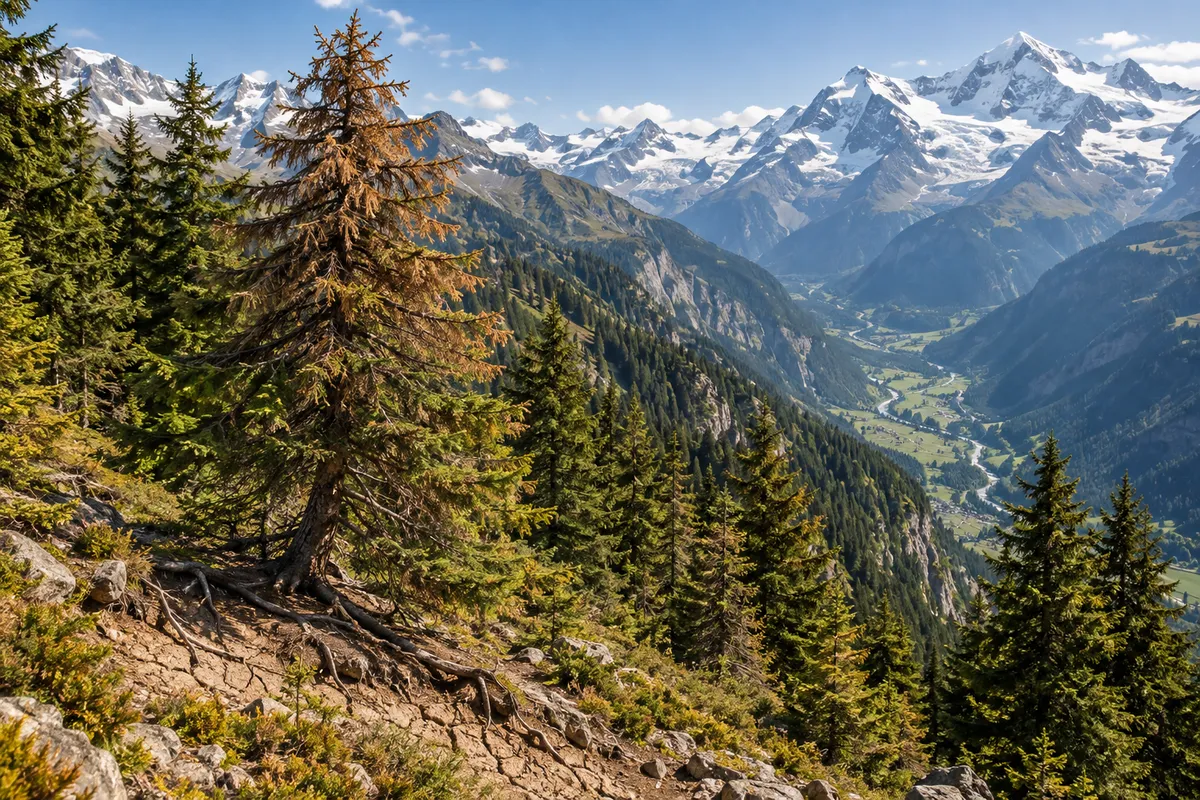
According to the report, Swiss researchers found that high-altitude forests, previously thought resilient to drought, are showing significant decline due to climate change. Trees growing as high as 2,200 meters are showing stress.
The study also found that summer droughts are killing large trees across all elevation zones, not just in the warm lowlands. Scientists described Swiss forests as being at a tipping point, where summer droughts are overwhelming the trees' tolerance and resilience.
The altitude paradox: why high forests were supposed to be safe
The common-sense view runs like this: higher up, it is cooler, so trees lose less water and should cope better with dry spells. Lowland forests, in contrast, were expected to be the first casualties of warming.
That logic made high-elevation forests look like a safe harbor. The Swiss findings, as reported, show the assumption is breaking down. Global warming and shifting precipitation patterns are putting stress on trees at every altitude, including places once considered a refuge.
The practical lesson: "high and cold" is no longer a reliable shorthand for "safe from drought."
Why it matters: forests as invisible infrastructure
Mountain forests do quiet, constant work. The report says the forests in question protect valleys from avalanches, rockfalls, and floods. You never notice that service until it weakens.
When large trees die, that protective layer thins. The summary of the research frames this as a compounding problem for mountain communities: the natural barriers shielding people from hazards are deteriorating at the same time as the climate is shifting. Scientists say this bodes ill for people in the valleys.
The source material doesn't provide specific figures on how much protection is lost per tree or per stand, so it would be a mistake to guess at precise risk levels. What the study does establish is the direction of travel: weaker forests, more dangerous natural hazards.
What this means for the wider Alps
The research concerns Switzerland, but the report points to implications for Alpine regions across Europe. The underlying drivers, rising temperatures and changing precipitation, are not confined by national borders. It is reasonable to wonder whether similar stress is showing up in neighboring mountain ranges, though that is our inference rather than a finding from this study.
What you can do with this information
You can't plant a forest from your armchair, but you can read your own landscape more carefully.
If you live or work in a mountain valley
- Ask your local forestry or municipal office how the protective forests above your area are being monitored. The study signals a need for adaptive forestry strategies, so local managers are the people to ask what's being done.
- Take official hazard advice seriously. Forests that once buffered slopes may do so less reliably than older maps and habits assume.
If you hike or ski in the Alps
- Notice the trees. Standing dead or thinning large trees on a slope are a visible sign of the stress the research describes.
- Follow local avalanche and rockfall guidance, which exists precisely because slopes carry risks that forests only partly manage.
If you're simply curious
- Rethink the "safe refuge" idea. The study is a good example of how an assumption can hold for decades and then fail once conditions cross a threshold.
The tipping-point idea, in plain terms
A tipping point doesn't mean every tree dies at once. It means a system that absorbed stress for years starts to lose that capacity. A forest can survive one dry summer; repeated droughts leave less time to recover. Per the researchers, summer droughts are now overwhelming the trees' tolerance and resilience, which is the point where decline becomes visible even in places that looked untouchable.
What happens next
The report stresses the need for immediate adaptive forestry strategies, meaning ways of managing forests so they can rebuild resilience in weakened stands. The summary we have doesn't spell out which specific measures Swiss foresters are using, so we won't speculate. If you want details, the original coverage on Phys is the place to start, along with your regional forestry service.
The takeaway
Treat mountain forests as living infrastructure that needs attention, not scenery that will always be there. If you rely on one for protection, find out who is monitoring it, and ask what the plan is for keeping it healthy.